

At GM Racket Sports, we call these short insights GIEMS — small gems of perspective where we share data, trends, and our own point of view on the fast-evolving world of racket sports.
A new racket sport is gaining strong momentum in the United States. A hybrid between badminton and tennis, played on a pickleball court, Typti is creating a real wave of excitement—especially in California and other early-adopter states.
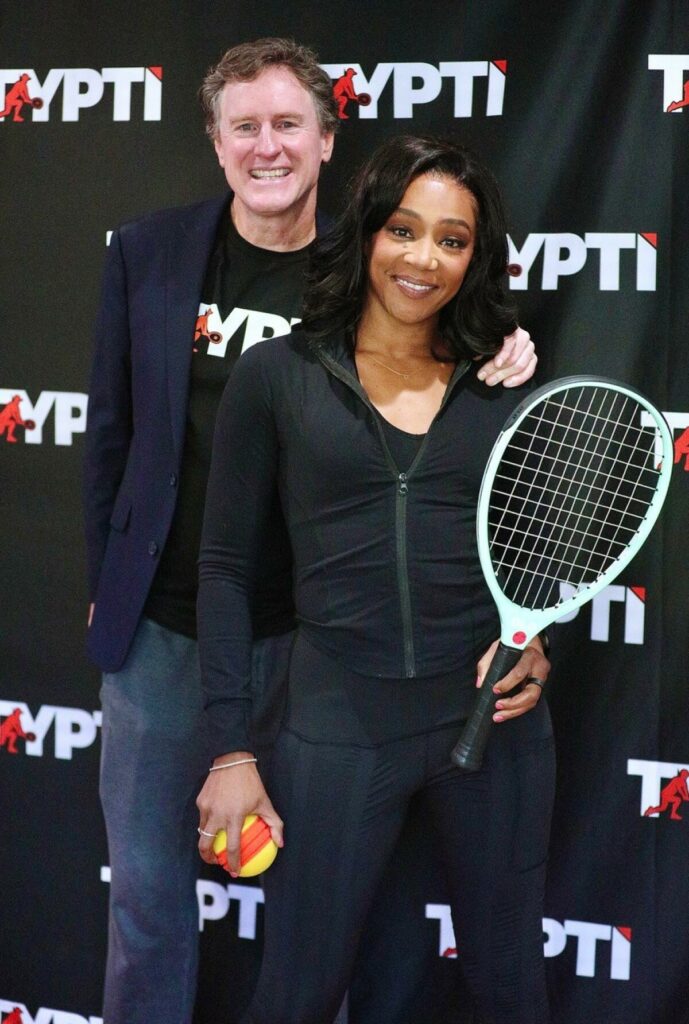
Typti was created by Tennis Channel founder Steve Bellamy and has already attracted investment and support from a wide range of well-known figures, including motivational speaker Tony Robbins; former NFL quarterback Drew Brees; actors Chris Pine and Kyle MacLachlan; comedian and actress Tiffany Haddish; TV host Melissa Rivers; filmmaker J.J. Abrams; and professional tennis players Nick Kyrgios and Milos Raonic, among others. This level of backing highlights the growing interest in the sport and its potential to scale rapidly.
Over the past few years, racket and paddle sports have experienced unprecedented growth in the U.S., with pickleball leading the way and now boasting an estimated 50 million players nationwide. New facilities continue to open across the country at a remarkable pace. Typti enters this ecosystem with several advantages that could accelerate its adoption.
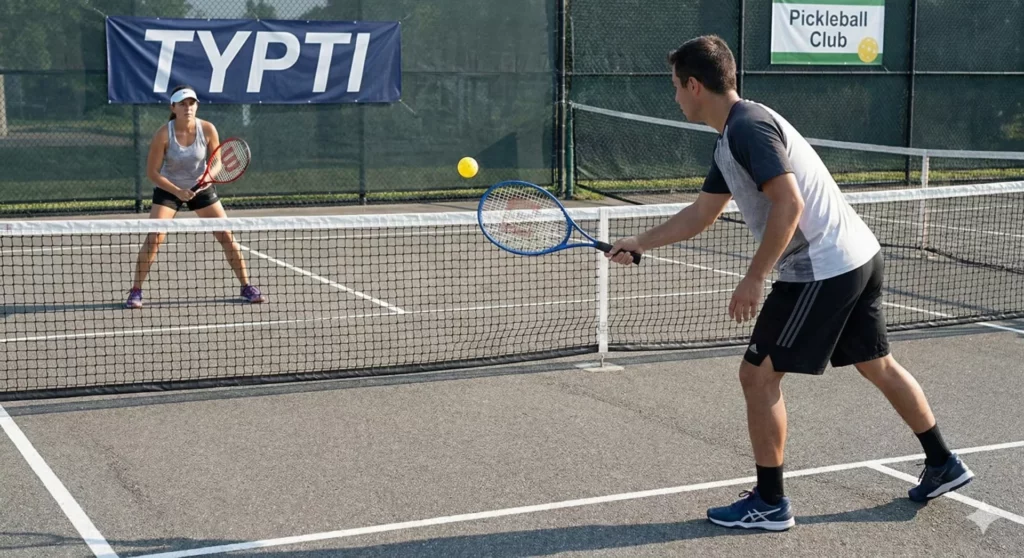
One of Typti’s main strengths is accessibility. It is easy for beginners, relatively low-impact on the body, and does not require an overhead serve. Another key advantage is infrastructure: Typti is played on existing pickleball courts, meaning it does not require a new type of facility to grow. This significantly lowers barriers to entry for clubs and municipalities.
In addition, noise-related complaints have become an increasing challenge for racket sports such as padel and pickleball—a topic we will explore in more detail in a future GIEMS. Typti, however, is almost noiseless, positioning it as an attractive alternative for urban areas and residential developments. By combining the best elements of existing racket sports while minimizing one of today’s most common concerns, Typti presents a compelling value proposition.
From an equipment perspective, Typti uses a 22-inch string racket, similar to a tennis racket but smaller, and a specialized 3.5-inch foam ball made with approximately 75% density polyurethane. Compared to traditional tennis or padel balls—where rubber plays a major role and has a higher environmental impact—the Typti ball is far less damaging to the environment. Sustainability, combined with low noise levels, adds yet another advantage to this emerging sport.
The scoring system is also designed to enhance excitement and unpredictability. With a unique three-in-a-row and up-down scoring format, matches create immediate pressure and dynamic momentum shifts. Unlike padel, there is no golden point, meaning games can extend as teams alternate winning points—similar to what we see in tennis or traditional pickleball formats.
From a development standpoint, coaching and professional organizations are already paying attention. The Racquet Sports Professionals Association (RSPA), which represents more than 14,000 teaching professionals—and of which our CEO is a member—recently announced the inclusion of Typti as its sixth supported sport. This reflects a clear strategic push to foster its growth. In parallel, Steve Bellamy has launched the first national Typti circuit, supported by major partnerships and committed top players, further accelerating its visibility and credibility.
At GM Racket Sports, we believe a new ocean of opportunities is opening as brands, clubs, and players begin to embrace Typti. That said, several important questions naturally arise. Will Typti impact the growth of padel in the U.S.? Could it influence pickleball participation, given that both sports share the same court? Might Typti even help relaunch tennis, considering it is played with a string racket rather than a paddle?
Our view is clear. There is more than enough room for all racket and paddle sports to coexist and thrive. Rather than competing in a zero-sum game, these sports can reinforce one another, expanding the overall player base across the United States—and eventually worldwide.
See you in the next GIEMS.